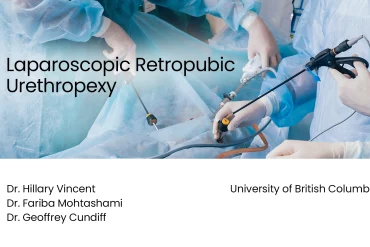

Intracorporeal knot tying is an essential skill for a laparoscopic surgeon. Acquiring this ability may be intimidating for learners. There are numerous methods available, many of which can be confusing to the learner. This video presents a straight-forward, easily replicable technique with related suturing pitfalls and tips. We highlight several advantages to this technique over others:

What Is Laparoscopy?
Laparoscopy is a type of minimally invasive gynecological surgery (MIGS) where your surgeon operates using small incisions and long, thin instruments. A camera helps them see inside the body without making larger abdominal incisions.
More Laparoscopy Resources
Surgical Videos

What Is an Extracorporeal Knot?
An extracorporeal knot is a type of knot the surgeon ties outside the body and then gently slides into place using a specific tool. This can be easier than tying a knot inside the body, and may also save time during the operation.
What Is a Modified Roeder’s Knot & How Does It Help?
A Roeder’s knot is a type of sliding extracorporeal knot. Modifying it with an additional half-hitch can help make it more secure after it has been tightened.
Pre- and Post-Surgery Checklist
What to Expect
This technique is one of several methods a surgeon might use during laparoscopic gynecologic surgery to close tissue or tie off an area safely.
If it’s used in your case, it’s typically done while you’re under anesthesia as part of your planned operation.
What to Prepare
Generally, you’ll need to do the following before any laparoscopic procedure:
• Follow your surgeon’s instructions about eating and drinking (including when to stop food and fluids beforehand)
• Review your medications and supplements with your provider, including blood thinners and anti-inflammatory medications
Questions for Your Doctor
If you are curious about this technique, here are some questions you may want to ask your healthcare provider:
• Will my laparoscopy require internal sutures or closure during the procedure?
• Do you typically use extracorporeal sliding knots in this kind of surgery? Why?
• What steps will you take to make sure sutures are secure without being too tight?
• Will tying this kind of knot change anything about my recovery or restrictions afterward?
• What symptoms after surgery should prompt me to call you?
Post-Surgery Recovery Process
Recovery timelines can vary for laparoscopic surgeries, but here are some general guidelines for what to expect:
• You may have soreness and fatigue for a few days after surgery.
• Your provider will tell you when to return to work, exercise, and lifting based on your specific procedure.
• Follow-up instructions are important, especially if you have pain that worsens instead of improving.
• Your team will tell you what to watch for, such as fever, heavy bleeding, or severe pain.

Surgery Process
Here’s how extracorporeal sliding knots like a modified Roeder’s knot are typically used during laparoscopic gynecologic surgery.
STEP 1: Laparoscopic Setup
A camera and instruments will be placed in small incisions so that your surgeon can work inside your pelvis.

STEP 2: Suturing the Target Area
Your surgeon will place stitches in areas where closure or tying is needed.
STEP 3: Bringing the Suture to the Outsideg
Your surgeon will bring the suture out of your body via a small incision so the knot can be tied outside the body.
STEP 4: Tying the Sliding Knot
The surgeon will tie the knot externally in a way that allows it to slide down the suture when tension is applied.

STEP 5: Sliding the Knot Into Position
The surgeon will use a tool to carefully guide the knot down into your body and onto the targeted tissue while maintaining controlled tension.

STEP 6: Securing the Knot
After the knot is tightened, additional locking steps (such as extra half-hitches in the modified technique) may be added to help keep it secure.
Topic FAQs
Why Do Surgeons Use Special Knot Techniques in Laparoscopy?
Laparoscopic surgery is done through small incisions using long instruments, which can make tying knots inside the body more challenging. Extracorporeal sliding knots let surgeons tie the knot outside the body and then guide it into place, which can be helpful in tight spaces.
Can This Technique Cause Problems?
If an extracorporeal knot is done incorrectly, it can cause issues like too much tension on tissue or irritation from pulling a long length of suture through the incision path. That’s why surgeons use careful tension control and add locking steps to keep knots stable.
Will a Modified Roeder’s Knot Change My Recovery from Laparoscopy?
In most cases, no. Your recovery timeline will depend largely on the type of laparoscopic surgery you had and your individual health factors. Ask your healthcare provider about the likely healing time, restrictions, or symptoms to watch for in your specific case.
What Symptoms After Laparoscopy Should I Call About?
Your provider will give you personalized instructions, but you should generally call if you experience symptoms like fever, worsening pain instead of gradual improvement, heavy bleeding, or anything that feels severe or unusual for you.